Plug-In Solar Rules in Great Britain: The Definitive 2026 Guide
The definitive guide to Great Britain’s plug-in solar rules: what changed on 27 August 2026, which products qualify and what homeowners must do.
In this article 8 sections

Great Britain’s socket-connected plug-in solar route has been in force since 27 August 2026. It applies to qualifying solar-only products, not every small solar kit.
A household in England, Scotland or Wales can now connect a qualifying solar-only product through its manufacturer-supplied approved three-pin plug. That sounds wonderfully simple. The important word is qualifying: the change does not legalise every balcony-solar kit, every 800W inverter or anything to which somebody has attached a British plug.
Approval belongs to the complete kit: its panels, inverter, plug, cables and mounting arrangement must be documented for use together.
What do the rules allow?
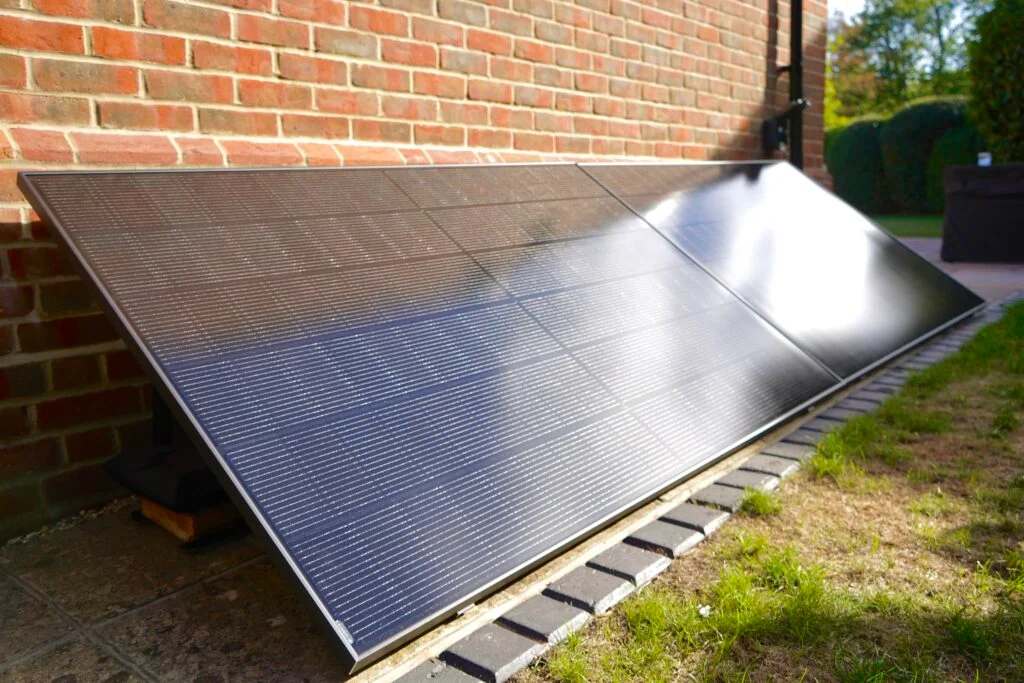
The new rules create a legal route for a complete plug-in microgenerator. In ordinary language, that means a solar product supplied as one documented system: panels, grid-following microinverter, cables, approved plug, safety protection, instructions and the mounting arrangement intended for it.
The product’s maximum apparent alternating-current output must not exceed 800VA and its alternating current must not exceed 3.5A. Those are limits at the household connection. They are not a shopping rule that says “any two 400W panels are legal”. A manufacturer may use more panel capacity to improve output in weak light, but only as part of the configuration it has assessed and documented.
The route applies in Great Britain: England, Scotland and Wales. Northern Ireland has separate electricity-safety and network arrangements, so buyers there should not rely on a page or product label that merely says “UK legal”.
The quickest way to avoid buying the wrong thing
Do not begin with the inverter wattage. Begin with the exact complete product.
A responsible manufacturer or retailer should be able to identify the precise kit and show that it meets the current government product specification, uses the approved manufacturer-fitted connection lead and plug, and follows the plug-in-solar version of the small-generator connection standard, G98. The instructions should also describe the permitted mounting arrangements, socket and circuit checks, labelling and notification process.
If the evidence applies only to an inverter, a cable sold separately or a European version of the kit, it does not prove that the bundle in your basket qualifies.
What the change does not permit
- Plug-in batteries or products that import household electricity for storage.
- An inverter fitted with an ordinary replacement plug.
- A mix-and-match collection of panels, cables and brackets.
- Extension leads, multi-way adaptors or travel adaptors.
- Several devices whose output is divided between different sockets.
- Equipment used in a mounting arrangement the manufacturer has not approved.
A home battery can still be perfectly lawful. It simply follows the normal product, electrical-installation and network rules rather than borrowing the new shortcut for solar-only equipment.
Do you need an electrician?
The point of the new route is that a suitable qualifying product can be installed and connected by an ordinary person without paying for a dedicated solar circuit. That does not mean every house and every socket is automatically suitable.
Follow the product’s circuit-checking instructions. If you cannot confidently identify the circuit, the socket is damaged, the wiring is old or altered, or the instructions tell you to obtain an assessment, use a competent electrician. A convenient connection does not make old or damaged wiring suitable.
Our installation and safety guide explains the practical checks.
You still have to tell the network operator
Small generators operate in parallel with the local electricity network, so the relevant G98 process still matters. Ofgem approved a G98 amendment designed for compliant plug-in solar, with implementation tied to the legislation taking effect.
For a qualifying product, install it as instructed and register it through the national plug-in solar registration portal. Keep the confirmation with the product paperwork. Our G98 notification guide explains the process.
Mounting and permission are part of the job
Electrical approval does not replace safe mounting, planning permission or consent from a landlord or building manager. Garden frames must resist wind. Balcony mounts must suit the rail and location. Roof or façade work may bring planning, access and structural questions that a plug-in product cannot wish away.
Renters and leaseholders should obtain any required landlord, freeholder or management-company permission. Planning rules also differ across the UK, and flats do not always enjoy the same permitted-development rights as houses.
How to judge a product claim
- Is this exact complete kit documented for the Great Britain route? A family name or an 800W setting is not enough.
- Does it arrive with the approved UK connection and mounting system? No replacement plugs, improvised leads or mystery brackets.
- Do the instructions explain the circuit check and G98 notification? If the seller cannot show them, wait.
Our current EcoFlow STREAM and UKSOL comparison shows why good hardware and documented plug-in eligibility are separate questions.
What to do before connecting
Measure available space, check permissions and read the evidence for the exact product. Before connecting, follow the current government consumer guidance and the manufacturer’s checks for the mounting, socket and circuit, then complete the required registration.
For a shorter tour through the practical questions, read the PluginSol plug-in solar guide and FAQ. For the story of launch day itself, see what changed on 27 August.
Sources: government launch guidance, SI 2026/848, the Department for Energy Security and Net Zero final interim product specification and Ofgem’s G98 decision.