
EcoFlow STREAM Ultra: UK Buying Guide and Specification Review
An independent UK buying guide to EcoFlow STREAM Ultra, covering price, specifications, strengths and practical limitations.
In this article 10 sections
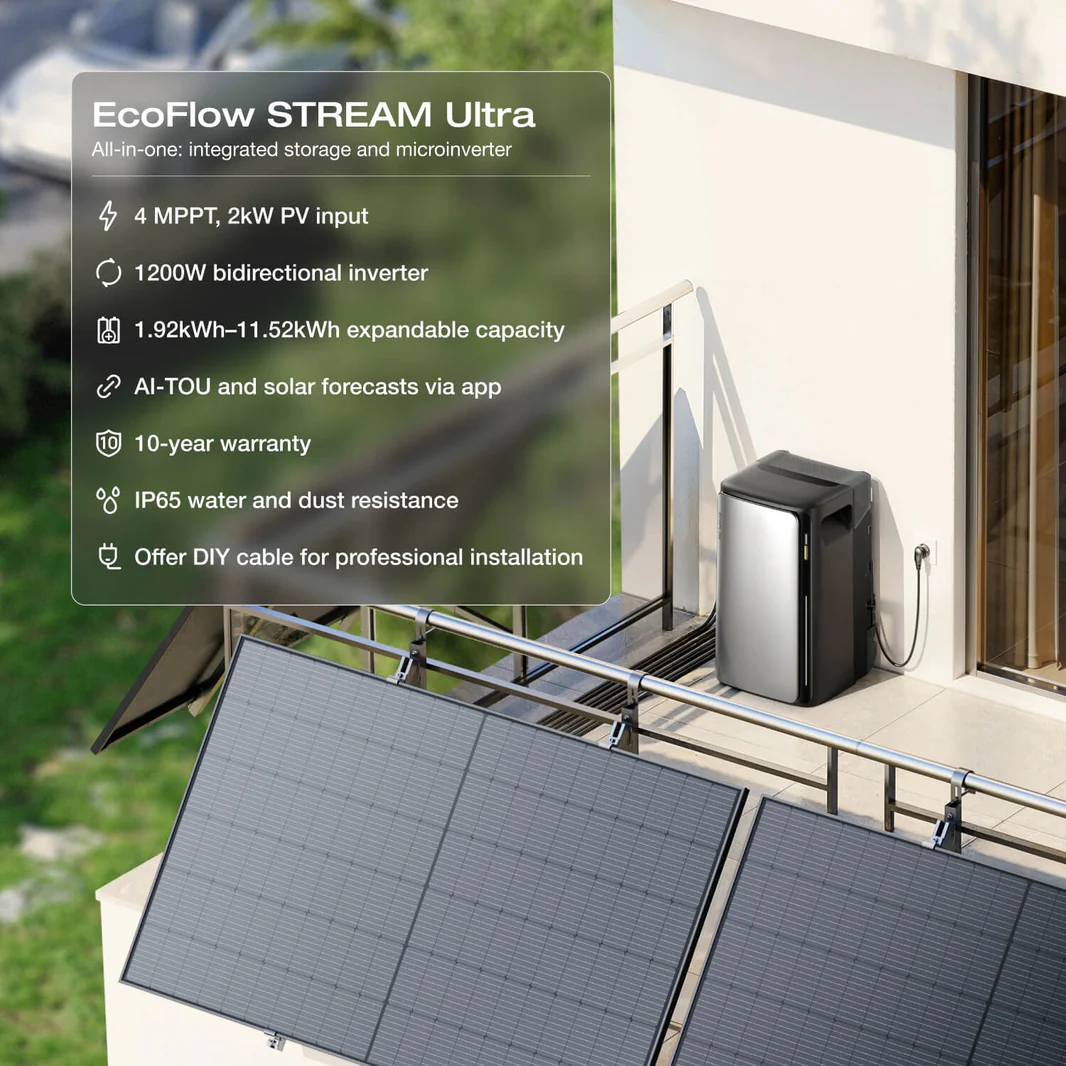
The EcoFlow STREAM Ultra puts a 1.92kWh battery, solar inputs and two mains outlets in one unit. It makes most sense for households with spare daytime solar or a cheap overnight tariff. The capacity is modest; the four separate solar inputs are the more interesting reason to buy it.
It is not a miniature whole-home backup system, nor is it plug-and-play in its current UK form. Its strongest selling point is the combination of four separate solar inputs and a relatively small battery: useful where panels face different directions and evening demand is modest.
Editorial update, 16 October 2026: The £899 Ultra and £1,399 Ultra X prices discussed below were recorded on 14 September and are historical comparison points, not current offers. Confirm the exact model, selected bundle, price and delivery status at EcoFlow before ordering. New model-comparison links have been added.
Check latest price at EcoFlow →
Design and installation
EcoFlow’s product photographs show a curved graphite enclosure with recessed handles. The published weight is 23.1kg, so plan a permanent, suitable position rather than treating it as a battery to move casually between rooms.
The enclosure has no large display; monitoring and settings use the app. EcoFlow specifies a position out of direct sunlight, at least 3cm clearance from nearby objects and separation from flammable materials.
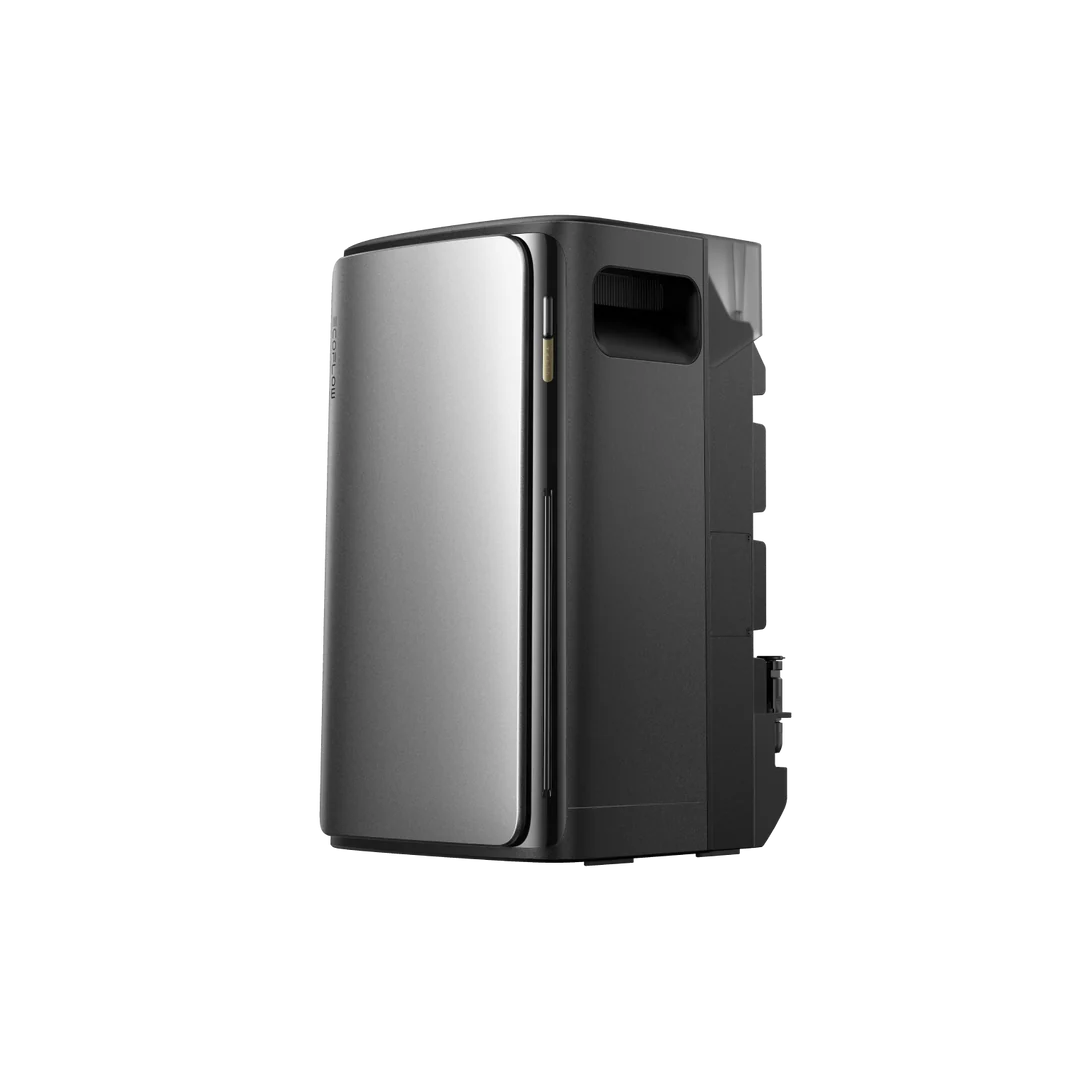
The connections are straightforward, but the mains installation is not a DIY job. The current UK package includes EcoFlow’s open-ended cable, which must be hardwired by a certified, registered electrician. That distinction matters: despite the STREAM range’s association with plug-in solar, this battery cannot simply be connected to an ordinary socket under the rules currently in force.
Great Britain’s solar-only plug-in route took effect on 27 August 2026, but it excludes battery-integrated products such as the Ultra. EcoFlow’s current UK instructions require professional hardwiring; the change did not turn this battery into an ordinary socket-connected solar kit.
The app and everyday use
EcoFlow’s published app information describes energy-flow monitoring for solar generation, battery charging and household demand. These features can help a buyer match storage use to generation and tariff periods.
The documented controls include charging schedules, reserve settings and time-of-use features. A sensible starting plan is to use the cheapest charging window while leaving space for expected solar generation. Automatic AI time-of-use optimisation requires a subscription, according to EcoFlow.
Software dependence is an important limitation. EcoFlow says full functionality requires Wi-Fi and the app; Bluetooth or wired-network-only connections do not provide features such as remote control and historical data. Buyers who want local-only controls should check the current supported functions carefully.
| Key specification | EcoFlow STREAM Ultra |
|---|---|
| Battery capacity | 1.92kWh |
| Battery chemistry | lithium iron phosphate |
| Direct solar input | Up to 2,000W across four independently controlled solar inputs |
| Single-unit battery output | 1,200W |
| mains outlets | Two |
| Expansion | Up to six compatible STREAM units; 11.52kWh total |
| Warranty | 10 years |
Charging from the grid
A 1.92kWh battery is large enough to shift a worthwhile amount of electricity without pretending it can carry a busy household through an entire evening. A single unit provides up to 1,200W from the battery, so background loads, entertainment equipment, computers and many everyday appliances are comfortable territory. Sustained high-power cooking or heating is another matter: the grid or a second compatible unit may still have work to do.
The two built-in outlets are more useful than they first appear. They provide a simple way to dedicate stored energy to particular appliances, while a more integrated installation can use the Ultra as part of a broader energy setup. Either way, the 1,200W limit is something to understand before purchase.
Cheap overnight charging is one of the strongest reasons to buy it. Shifting 1.5kWh each day across a 20p/kWh price gap is worth roughly £109.50 a year before conversion losses; a 25p gap raises the gross figure to about £137. Reserve settings, conversion losses and days when the stored energy is not fully used all reduce the result.
Grid charging should also leave room for free solar when the forecast is good. Filling the battery overnight can leave too little space for midday solar; compare the charging price with the value of that solar before setting the schedule.
Solar is where it stands out
Four independent independently controlled solar inputs are the Ultra’s most distinctive feature. Each panel group can be managed separately, which is genuinely helpful when panels face different directions or one part of the array catches shade. Competing compact batteries often offer far less freedom.
Total direct solar input is rated at up to 2,000W. That gives the Ultra room to work with something more ambitious than a token panel or two, while the 1.92kWh battery remains small enough to fill on a productive day. Surplus generation can then cover evening loads rather than being exported for relatively little value.
Panel matching still requires care. EcoFlow specifies 15–60V and no more than 14A for each solar input. Headline wattage is not enough information: voltage, current and the way panels are connected all matter.
Four independent independently controlled solar inputs allow separate panel groups to be managed within the stated input limits. That is a useful specification where panels occupy different orientations; the benefit still depends on the actual panel arrangement and shading.
The good parts and the irritations
The four independently controlled solar inputs, tariff controls and compact capacity form a useful specification for a small solar-and-storage setup. EcoFlow quotes lithium iron phosphate chemistry, 6,000 cycles to 70% remaining capacity and a ten-year warranty.
The frustrations are just as clear. Professional hardwiring takes some shine off the plug-in promise and adds an installation cost that is easy to overlook. Capacity is useful rather than generous, while the 1,200W single-unit output demands realistic expectations around high-power appliances.
EcoFlow also offers automation, forecasts and software-led optimisation. Compare any subscription cost with the likely extra saving over a simple tariff schedule and reserve setting; more automation is not automatically better value.
Expansion is possible — up to six compatible units and 11.52kWh — but adding batteries can quickly turn a keenly priced starter system into an expensive ecosystem. Work out the capacity you actually need before treating expandability as a buying argument.
How should you assess its value?
The earlier £899 hardware quote is a useful historical comparison, but the buying decision needs a fresh installed price. Compare the value of the 1.92kWh storage and four solar inputs with the newer alternatives, including the accessories and installation required for your home. A discount against a reference price does not establish the best value.
The larger STREAM Ultra X offers 3.84kWh and was listed at £1,399 on EcoFlow’s UK page when checked on 14 September 2026. That is £500 more than the quoted Ultra price, before any differences in installation or accessories.
Ultra is worth considering if 1.92kWh is enough and flexible solar input matters more than maximum capacity. Ultra X deserves comparison for heavier evening consumption, using current quotations rather than the historical £500 gap. Unused capacity is not a saving. Electrician’s work, panels, cables and monitoring hardware all belong in the installed-system price.
Verdict
The EcoFlow STREAM Ultra’s strongest advantage is its four-input solar arrangement. Combined with tariff scheduling and a 1.92kWh battery, it offers a plausible way to shift a modest amount of electricity into the hours when a household needs it.
It is not the battery for whole-home backup, impatient DIY installation or sustained high-power loads from a single unit. Reliance on cloud-connected controls will also bother some buyers. None of those limitations is hidden, but all should shape the decision.
Ultra deserves a place on the shortlist where modest storage, flexible panel inputs and a suitable tariff match the household’s needs. Its value depends on a current installed quotation and the energy you can usefully shift. Compare the newer models before committing; the historical £899 quote is not a present buying price.
Check latest price at EcoFlow →
Sources and further reading
- EcoFlow STREAM Ultra product page
- Government response on plug-in solar regulation
- Is a battery worth adding to plug-in solar?
- More battery guides
Compare the current STREAM options
If you do not need Ultra’s fourth solar tracker, our STREAM Pro versus Ultra buying review explains what changes and what stays the same. If the issue is storage capacity rather than panel inputs, compare the larger STREAM 5000 and obtain a quotation for the complete installation.
Related guides
- Plug-in solar rules, costs and realistic savings
- Is a battery worth adding to plug-in solar?
- EcoFlow STREAM vs Zendure SolarFlow vs Anker SOLIX
- STREAM AC Pro review
- STREAM Solar System review
PluginSol may earn a commission from links on this page.