
EcoFlow STREAM Solar System: UK Buying Guide
An independent buying guide to the EcoFlow STREAM solar system, its published specifications, costs and UK connection position.
In this article 14 sections
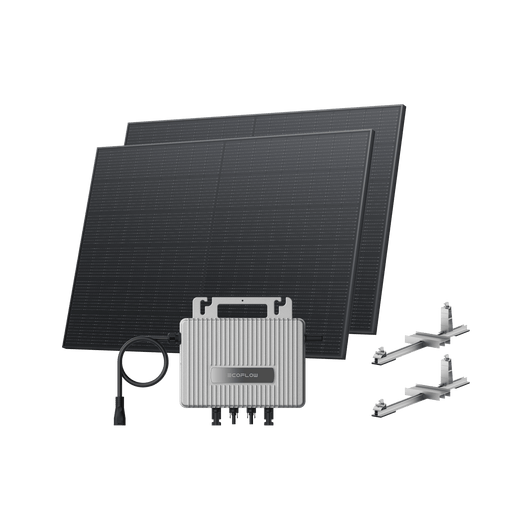
Updated 16 October 2026: EcoFlow’s UK two-500W-panel, no-brackets listing displayed £549 and sold-out labels when checked. Stock is unconfirmed; do not plan installation around an assumed delivery. Compare alternatives in our current kit buying guide.
The examples below use the October–December 2026 GB Direct Debit average of 26.32p/kWh. Your tariff may differ; use your own rate and full installed cost in the savings calculator. Standing charges remain payable.
EcoFlow’s STREAM Solar System lets you choose panels and mounting hardware around a small inverter. The bundles pair a STREAM microinverter with two or four rigid panels, with mounting options for balconies, walls, gardens and roofs. Choose the kit to fit the space; the app can wait. Batteries from the wider STREAM range are a separate purchase and installation question.
For the clearest current buying context, compare EcoFlow STREAM with the compliant UKSOL Plug-In Solar Pro. The comparison separates hardware value from the exact GB connection route.
EcoFlow’s UK connection instructions determine whether you need an electrician. Check the 27 August 2026 rules and product evidence, then read our focused analysis of EcoFlow STREAM 800W under the new rules.
That distinction matters. EcoFlow lists the solar-only product as the “STREAM 800W Microinverter Kit”; the selected two-500W-panel package without brackets displayed £549 on 16 October 2026, alongside sold-out labels. The advertised bundle does not include a battery, and its UK connection method must follow the product supplied and the rules in force. The wider proposition is attractive because its parts share one app and there is a sensible expansion path. It is not a shortcut around electrical work, safe mounting or network requirements.
EcoFlow STREAM Solar System: the short verdict
PluginSol verdict: the solar-only STREAM bundles are competitively priced and unusually flexible, particularly for a garden, wall or balcony where standard rooftop solar is impractical. The 800–1,040Wp panel choices and 800W microinverter are a sensible match. The strongest reason to buy is the coherent range of panels, brackets, monitoring and optional batteries. The weakness is a confusing shop full of member prices, changing bundles and “plug and play” language that can obscure what is—and is not—included.
What is included?
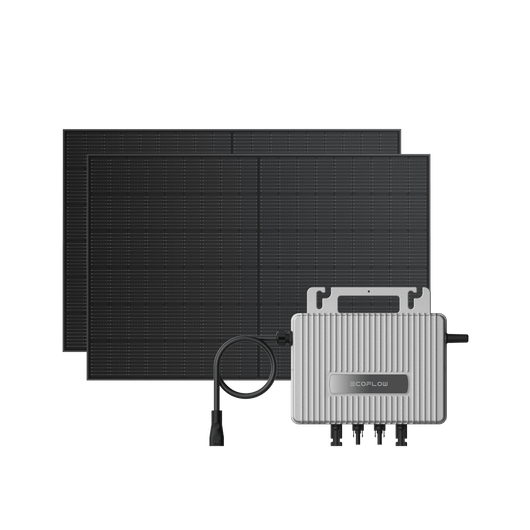
The base product pairs one STREAM microinverter with rigid solar panels. On 16 October 2026, EcoFlow’s UK listing displayed £549 for two 500W panels without brackets, reduced from £678, with sold-out labels. The £349 two-400W option is an older price snapshot, not a current available offer. Other panel and mounting combinations have separate prices and stock positions.
The microinverter box includes the inverter, a supplied connection cable, fixings, safety and installation guides, and a warranty card. Panel bundles add the selected modules; mounting hardware is included only where the chosen option says so. Solar-panel extension cables are sold separately if needed. A battery, smart meter and electrician are not included in these solar-only prices.
| Example configuration | Historical bundle snapshot — not current offers | Best fit |
|---|---|---|
| 2 × 400W + microinverter, no brackets | £349 sale (was £499); sold out | Buyer with a suitable existing mounting plan |
| 2 × 520W + microinverter, garden/ground | £549 sale (was £749); sold out | High panel capacity with accessible mounting |
| 2 × 400W + microinverter, semi-enclosed balcony | £599; sold out | Purpose-matched balcony hardware |
| 4 × 250W + microinverter, lightweight balcony brackets | £1,249; sold out | Narrower panels where two large modules do not fit |
The four rows retain earlier bundle-price research for context; they have not all been rechecked in this update. The earlier claim that the £549 two-500W-panel kit was available has been removed. Confirm the selected variant, mounting contents, shipping charge and delivery date directly before ordering.
Check latest price at EcoFlow →
How the system works
Panels generate direct-current electricity. The STREAM microinverter tracks the panels and converts their output into grid-synchronised alternating current. The home uses that energy alongside the grid: if solar supplies 500W while the property consumes 700W, grid import falls to roughly 200W. If production exceeds demand, the surplus is exported unless a compatible control or battery captures it.
The microinverter is rated for 800VA alternating-current output, so fitting 900W, 1,000W or 1,040W of panels does not turn it into a 1kW mains-output generator. Oversizing the panel array can help it reach useful output earlier and later in the day, but the inverter still clips peaks at its output ceiling.
Storage is optional. A STREAM Ultra or Pro can accept solar directly, while STREAM AC Pro stores energy on the household side and can work with the STREAM microinverter or third-party units. The app can coordinate compatible devices in the same “Space”, prioritising household use, battery charging or scheduled grid charging according to the configuration.
Capacity, output and likely generation
EcoFlow advertises 858kWh annual generation, but its footnote uses a German household and a £0.33/kWh electricity-price assumption. This is manufacturer marketing context, not a PluginSol measurement or a forecast for your UK home. Location, direction, tilt, shade, temperature, panel mismatch and the 800W inverter cap all affect the result.
For planning, an unshaded south-facing 800Wp array at a useful angle might produce roughly 600–800kWh a year in much of Britain. A 1,000–1,040Wp array could produce more shoulder-season energy, though some summer peaks will be clipped. Vertical balcony or façade panels often yield less annually but can have a helpful winter profile. PluginSol’s 800W generation guide gives regional and seasonal assumptions.
The microinverter’s claimed 3W start-up input is welcome in weak light, but it does not alter the amount of solar energy available. Low start-up power can extend the operating window; it cannot make overcast morning light equivalent to midday sun.
Installation: panels first, electrics second
Choosing the physical site is the first serious job. Two full-size panels need several square metres of clear space, a safe cable route and a mounting system rated for the structure and wind exposure. Balcony rails, façades, flat roofs and gardens present different loads and hazards. The correct EcoFlow bracket is more valuable than a small panel-wattage upgrade if it turns a precarious arrangement into a documented one.
Roof work and exposed elevated mounting are not casual DIY tasks. Check structural suitability, landlord or freeholder consent, listed-building restrictions and planning requirements independently. Planning permission does not decide whether an electrical connection is safe, and electrical approval does not authorise drilling a façade.
For the connection, EcoFlow’s current UK product FAQ says the BKW DIY cable must connect to the distribution board through a professional installer or electrician. Budget on that documented route for this kit; do not assume an ordinary socket connection. The new plug-in-microgenerator route introduced on 27 August 2026 applies only to complete solar-only products meeting the statutory definition, interim product specification and approved-plug requirements. A marketing description or foreign plug does not establish compliance. Battery-integrated plug-in equipment is outside that route.
The small-generator connection standards G98 and G99 govern how equipment connects to the local electricity network. They are separate from planning and from the wiring regulations. Where the supplied product requires hardwiring, use a registered electrician; where an approved plug-in version is supplied, comply with its socket, circuit and notification instructions. Read PluginSol’s current rules guide before ordering around an assumed connection method.
App, controls and everyday use
The EcoFlow app brings monitoring and controls together. With the necessary metering, it can show generation and household demand, control export behaviour and coordinate STREAM batteries. Time-of-use schedules and solar forecasts are available in supported configurations, and third-party smart-meter integrations broaden the monitoring options.
The useful everyday experience should be uneventful: panels generate, background loads absorb the power and the grid supplies the balance. Monitoring is most valuable during the first weeks, when it reveals whether midday surplus is large enough to justify storage and whether shade is harming one part of the array.
Our main criticism is the sales pitch. EcoFlow leans heavily on “AI” and zero-bill claims when the practical wins are simpler: a decent energy graph, sensible scheduling and a microinverter that starts in low light. The app cannot compensate for a north-facing shaded panel or a home that is empty all day.
Is a battery worth adding?
Not automatically. A solar-only system is cheapest and has fewer conversion losses. If a home consumes 70–90% of generation as it occurs, a battery may have little surplus to capture. Run the panels first and use the app or meter to measure export through spring and summer.
Storage becomes more persuasive when daytime demand is low but evening demand is high, export earns little, or a time-of-use tariff offers cheap overnight charging. One 1.92kWh STREAM battery provides a useful step, but compare the fully installed cost and usable capacity with a conventional home battery. The PluginSol battery-payback article shows why self-consumption assumptions matter.
Realistic savings and payback
Take an 800Wp array producing 680kWh a year. If the home uses 75% directly, 510kWh displaces imported electricity. At 26.32p/kWh—the Ofgem average capped unit rate for October to December 2026—that is about £134 a year. An illustrative £500 hardware budget—not a current EcoFlow bundle quote—would recover its hardware cost in about 3.7 years on those assumptions. These are illustrative generation and self-consumption inputs, not measured STREAM results.
Add £150 of mounting and £250 of electrical work and the £900 total takes about 6.7 years. Actual quotes can be lower or higher. A shaded vertical array generating 450kWh with 60% self-consumption saves only about £71 a year and pushes that same installed cost towards 13 years.
A battery should be assessed on the extra value it creates, not on all solar generation. Suppose it shifts 150kWh a year that would otherwise be exported for no payment. At 26.32p/kWh, 150kWh delivered after storage losses avoids £39.48 of imports a year, assuming that energy would otherwise have no export value. More cycling on a strong time-of-use tariff can improve the figure; paying a good export rate can reduce it. EcoFlow’s £115 annual saving is a manufacturer scenario using the assumptions in its footnote, not a household-specific forecast.
Complete kit versus buying parts separately
Buying the STREAM bundle gives one retailer, known panel options, matching cables and a route into EcoFlow’s app and battery ecosystem. The mounting menu is unusually broad. For a first-time buyer, that cohesion has value and reduces the risk of combining connectors or brackets that were never meant to work together.
Buying separately can be cheaper and more flexible. A local installer may source panels with better dimensions for the site, and a different microinverter may have stronger local support or monitoring. Component shopping also makes it easier to compare per-watt prices. The burden shifts to the buyer or installer to prove electrical, mechanical and regulatory compatibility.
The complete kit therefore wins when the listed mounting package genuinely fits the property and the buyer values a single app. It loses when the site needs bespoke mounting, when a larger rooftop array is feasible, or when the chosen STREAM battery makes the total price approach a conventional professionally installed system.
Pros and cons
Pros
- Useful choice of 800–1,040Wp panel configurations.
- 800W microinverter is well matched to small household base loads.
- Balcony, garden, façade and roof mounting options are easier to compare than with many rivals.
- Solar-only entry price is competitive.
- Coherent app and optional STREAM storage path.
Cons
- The base “complete” kit does not include a battery, smart meter or necessarily brackets.
- Member prices, sale prices and stock messages make comparison unnecessarily confusing.
- Installation cost can materially change payback.
- 800W alternating-current output remains the ceiling even with 1,040Wp of panels.
- Marketing savings and zero-bill language need much more context.
Who does it suit?
The STREAM system is a strong candidate for a flat dweller with an appropriate balcony and permissions, a renter able to use a removable garden frame, or a homeowner wanting a small array before committing to rooftop solar. It particularly suits steady daytime demand: refrigeration, broadband, office equipment and other background loads.
Consider alternatives if a clear roof can take a multi-kilowatt array, the site needs bespoke structural work, or the goal is whole-home backup. A conventional installation certified under the UK’s MCS renewable-energy scheme may provide more generation, a clearer export route and better value at larger scale. Start with PluginSol’s beginner guide if the distinction between panel rating, inverter output and household load is unfamiliar.
Final verdict
EcoFlow has assembled one of the more convincing small-solar ranges because the panels, microinverter, brackets, app and optional storage form an understandable path. The solar-only bundle can be good value and the oversize-panel options should perform usefully beyond perfect midday conditions.
Buy the configuration, not the slogan. Check what the selected bundle includes, obtain the mounting and electrical price, model conservative generation and confirm the connection method supplied at the time. If those figures work without assuming a battery or a zero bill, the STREAM Solar System deserves a place near the top of the shortlist.
See current STREAM Solar System bundles →
Frequently asked questions
Does the STREAM Solar System include a battery?
No. The solar-system product page bundles panels and a STREAM microinverter. Compatible STREAM storage is an optional additional purchase unless a particular offer explicitly lists a battery.
What is the maximum output?
The STREAM microinverter is rated at 800VA alternating-current output. Panel capacity can be higher—up to 1,040Wp in current bundles—but that does not raise the inverter’s output ceiling.
How much space do two panels need?
It depends on the selected 400W, 450W, 500W or 520W module. Check the exact panel dimensions on the chosen variant and allow for the specified bracket, clearances and safe access rather than estimating from wattage.
Can it work without the app?
Basic solar conversion does not depend on watching a phone, but setup, monitoring, energy schedules and coordination with meters or STREAM batteries rely on the EcoFlow app and network connection.
Will it work in a power cut?
A normal grid-tied microinverter must shut down when the grid fails. Solar-only bundles do not provide household backup. Certain STREAM batteries can power appliances through dedicated outlets, which is different from energising the home’s normal circuits.
Is the kit currently in stock?
Availability varies by panel and mounting option; several pages showed sold-out variants when checked. Use the price link to confirm the exact bundle and delivery status before planning installation.
PluginSol may earn a commission from links on this page.
Buying the inverter separately?
Our STREAM 800W Microinverter buying review covers standalone hardware, panel matching and the components missing from an inverter-only purchase. Compare the complete installed total with a bundle before choosing separate parts.
Still deciding whether this format fits your home? The PluginSol UK FAQ covers sockets, notification to your electricity network operator, likely generation, batteries and the current product rules.
Before adding storage, compare our small solar battery buying guide. A battery needs its own installation and savings assessment.