
Octopus Plug-In Solar: Is the £650 Two-Panel Kit Worth Waiting For?
An independent look at Octopus plug-in solar: kit prices, practical installation, export eligibility, delivery delays and who it makes sense for.
In this article 8 sections
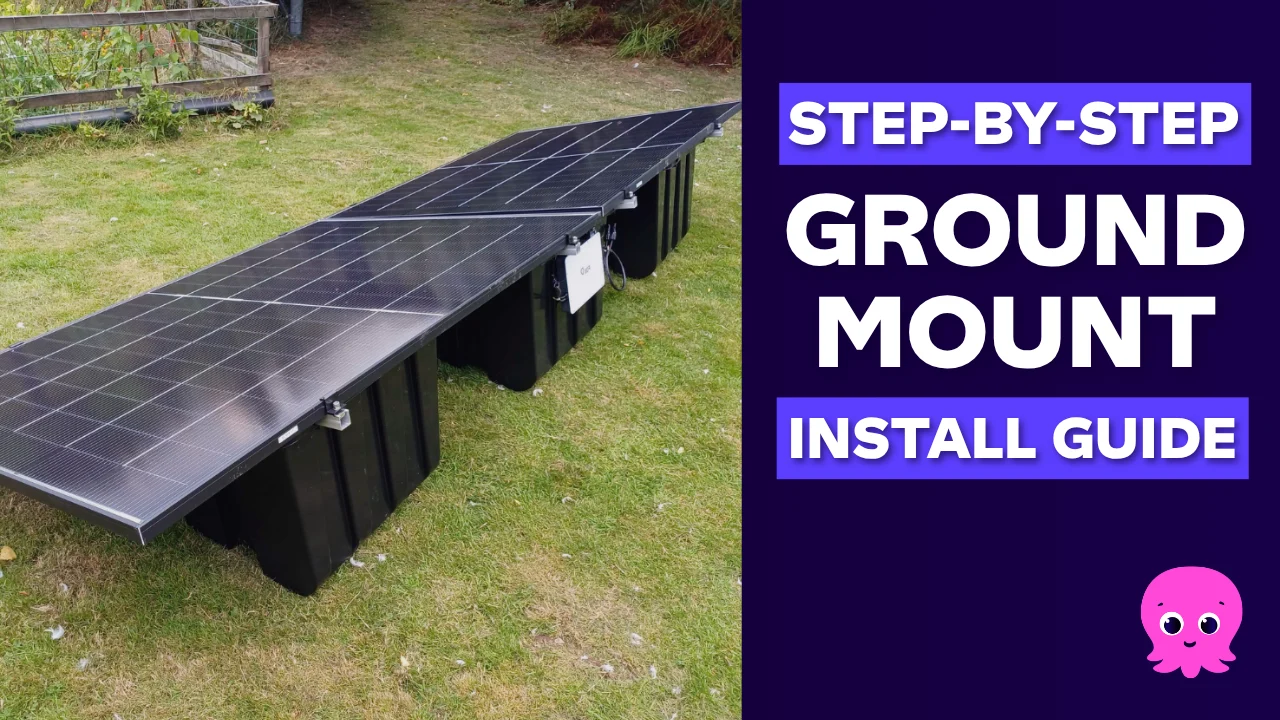
Image: Octopus Energy.
Octopus’s plug-in solar kit is an appealing proposition: a recognisable supplier, a complete bundle and a price that does not require a second mortgage. But a good deal on paper still needs a suitable home. These are full-size panels, not something you casually prop beside a flowerpot.
Worth considering if you have a sunny, usable outdoor space and can put the electricity to work during the day. Export eligibility adds interest for Octopus customers. The main reasons to pause are the delivery wait and whether the panels actually fit your property.
What is in the bundle?
Octopus offers one-panel and two-panel bundles. The advertised prices are £450 and £650 respectively, with the two-panel price including VAT and kerbside delivery. Each panel is rated at 460W; the bundle includes a microinverter, mounting equipment and a five-metre mains cable. Octopus’s product information describes wall or ground mounting and in-app generation monitoring for its energy customers. [1]
| Bundle | Panel rating | Advertised price |
|---|---|---|
| One panel | 460W | £450 |
| Two panels | 2 × 460W | £650 |
Two 460W panels total 920W of panel capacity. That is a different number from the permitted AC output of a compliant plug-in device. Panel ratings describe the DC side under standard test conditions; they are not a promise that 920W will arrive at your socket.
Do not buy on the panel wattage alone. The exact complete device, its inverter and its approved installation arrangement are what matter. Energy Saving Trust points buyers to the ENA register to check compliant products. [3]
Why has it attracted so much attention?
Octopus said on 1 October that its first 500 kits had sold in two weeks, and that 89% of customers chose two panels. That is the supplier’s sales report, rather than an independent measure of the entire market, but it explains why this particular kit deserves a closer look. [2]
A familiar name also makes a relatively unfamiliar purchase feel less daunting. There is a useful difference between understanding solar in principle and knowing who to call when a delivery arrives with a cracked panel. Brand recognition helps with confidence; it does not make your garden sunnier.
Measure the space before admiring the price
Octopus gives approximate panel dimensions of 1.8m by 1.1m and a weight of around 22kg each. Its order information also describes pallet delivery. [1] Work out where the equipment will go, how it will get there and whether you can handle it safely.
The panel face area is only the starting point. Allow room for the mounting system, the chosen tilt, ballast or fixings, access and the cable route. A space that looks ideal in a listing photograph may be your route to the bins, the back door or the washing line.
Check the light at different times of day. A sunny patch at noon can be shaded for most of the morning and afternoon. If you are buying in October, also think about the lower winter sun. Moving a panel a short distance can matter more than choosing a slightly higher rated one.
What changes if you can earn export payments?
Octopus’s current terms say that buyers of its kit who also take their home energy from Octopus can access Outgoing Prime after the required registration and DNO approval. A kit bought elsewhere is not eligible for an Octopus export tariff under that plug-in offer. Do not assume the same arrangement applies to every DIY kit. [1]
The value of export is straightforward. Suppose, purely as an example, a system generates 700kWh in a year and the household uses half of it directly. That leaves 350kWh exported. If an eligible tariff paid 9p/kWh, those exports would be worth £31.50. That 9p is an illustration, not a quoted current tariff.
The 350kWh used at home would be worth £92.12 at an import rate of 26.32p/kWh. Together, the illustrative benefit would be £123.62. Without paid export it would be £92.12. The calculation makes the distinction visible: the panel has not generated more electricity; more of its output has acquired a financial value.
We use Ofgem’s October–December 2026 GB Direct Debit average of 26.32p/kWh for that example. Use your own daytime rate for your decision, especially on a time-of-use tariff. [4]
How long would it take to pay back?
For a £650 purchase, £80 of annual benefit gives a simple payback of about 8.1 years. At £120 it is about 5.4 years; at £150, about 4.3 years. These are arithmetic scenarios, not measured results or promised returns.
| Annual benefit assumed | Simple payback on £650 |
|---|---|
| £80 | 8.1 years |
| £120 | 5.4 years |
| £150 | 4.3 years |
Those figures exclude additional socket work, mounting materials, repairs, degradation and changes in energy prices. If the setup needs another £150 before it can be used, calculate payback on £800. Small solar purchases still deserve a complete budget.
The delivery wait matters
The shop was showing sold out when checked on 13 October 2026. Its delivery notice places orders made after 28 September towards the end of November. That is an advertised estimate for those existing orders, not a delivery promise for a new purchase. [5]
If you already have a suitable space and the numbers work, waiting may be reasonable. If you need generation immediately, look at the actual availability of other complete kits. A product listing and a confirmed delivery slot are different things.
Who should buy it?
This bundle is most convincing for someone who has already checked the location, has useful daylight electricity demand and values a complete package from an established supplier. An eligible export arrangement could also help someone who cannot use all their generation directly.
It is less convincing for a heavily shaded garden, a household hoping to cover substantial winter heating, or someone who has not checked permission and electrical suitability. Follow the supplied instructions; any work needed to make the electrical installation suitable belongs with a qualified electrician.
Our view: the Octopus kit deserves a place on a buying shortlist. Start with your space and your electricity use, then check the current price, complete-device listing and delivery date. The octopus on the inverter is a bonus. It cannot improve a north-facing wall.
Next: use the PlugInSol savings calculator and our kit buying guide.
Sources and evidence
Checked 13 October 2026. Prices, stock and future launch details can change.