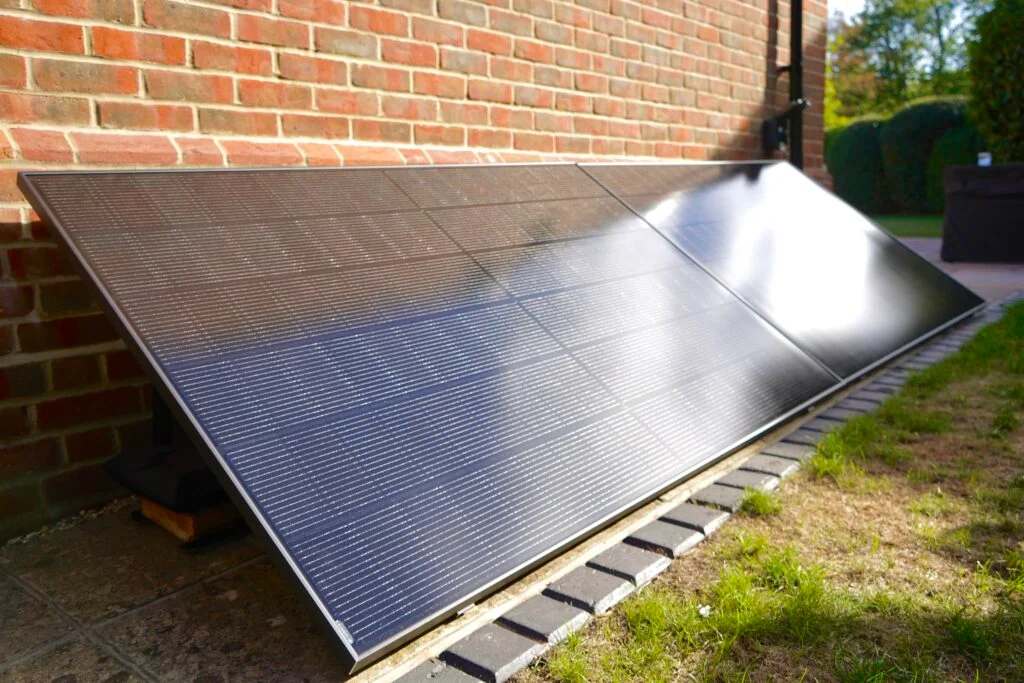
Your First Weekend With Plug-In Solar: What You Actually Need to Get Started
A practical first-weekend guide to panels, positioning, mounting, circuit safety, registration and realistic output from a compliant plug-in solar system.
In this article 7 sections
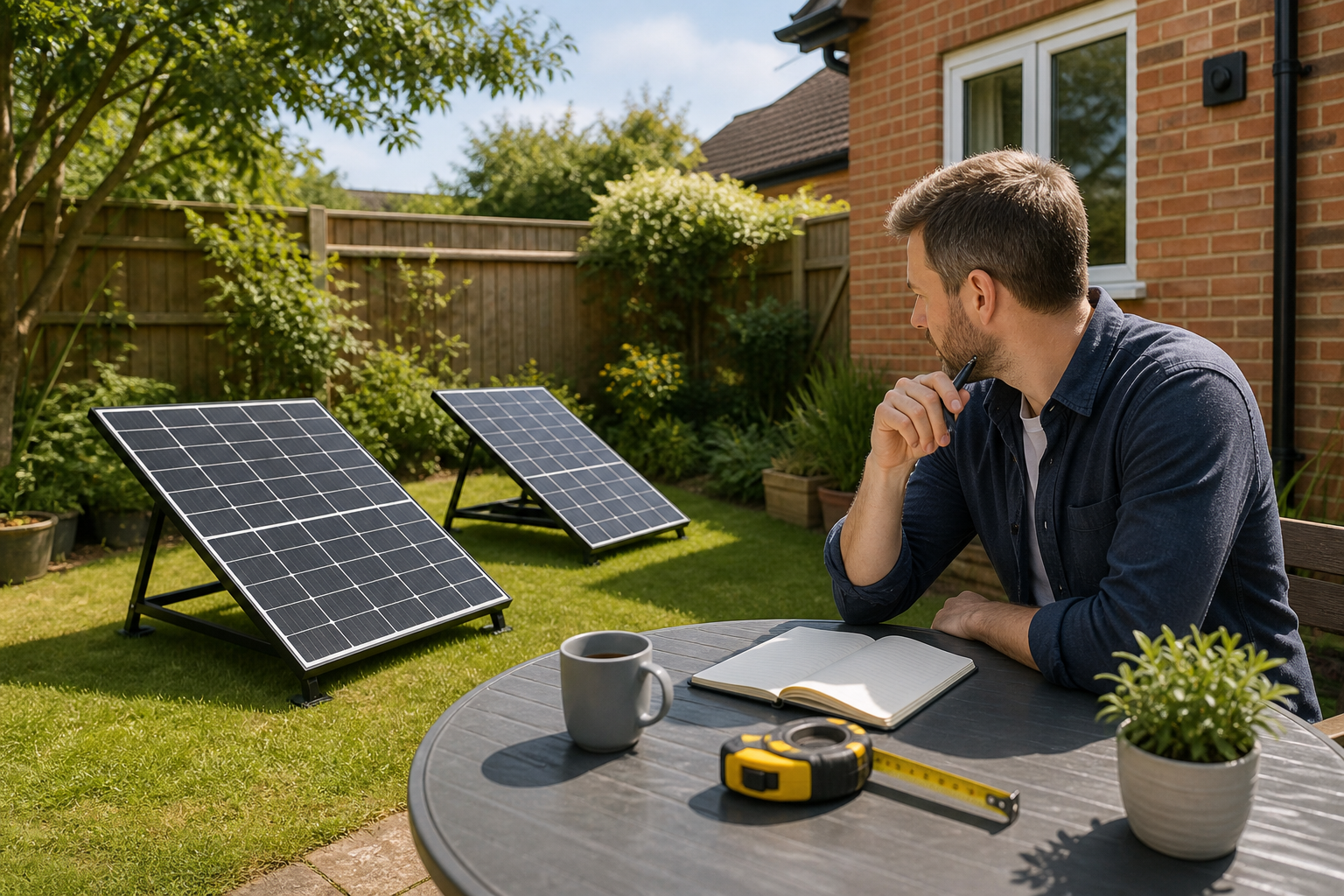
A first weekend with plug-in solar starts with finding a sunny position and choosing a complete kit that qualifies under the rules. Order the wrong bundle and the weekend may be spent arranging a return instead. Measure the space and read the installation instructions before paying.
Keep the UK plug-in solar FAQ beside you for quick answers, and use the legal guide to verify that the exact product qualifies.
Before unpacking, use our full plug-in solar installation checklist; after setup, follow the electricity network registration steps.
New to plug-in solar? Read the UK beginner’s guide first, then check what the 27 August 2026 rules actually allow before setup a system.
A successful first weekend begins with a tape measure and a product document, not a plug. The new route is designed to be accessible, but it is still generation equipment mounted outdoors and connected to your home’s wiring.
Friday evening: choose the patch of sun
Stand where the panels might go and look for the unglamorous obstacles: the neighbour’s chimney, the afternoon shadow of a fence, a tree that is leafy in summer and merely skeletal when you measure in winter. Shade across even part of a module can drag down production.
South is excellent, east and west can be useful, particularly when household demand is higher in the morning or late afternoon. A vertical balcony or wall usually produces less annually than a well-tilted unshaded array, but may give a surprisingly useful winter profile and shed dirt more readily.
Measure the physical panel dimensions, not just the wattage. Two 400W modules typically occupy several square metres once gaps and brackets are allowed. Confirm that doors open, paths remain usable and cables can follow the manufacturer’s permitted route without becoming a trip hazard.
Saturday morning: inspect what is actually in the kit
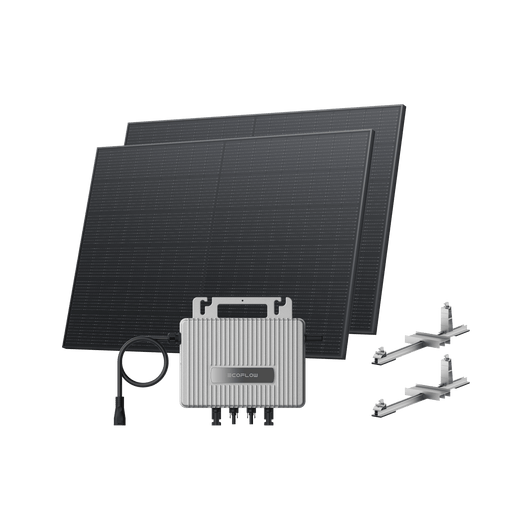
You need modules, a grid-following microinverter, correctly rated solar-panel connectors and leads, the approved mains connection lead, a documented mounting system, labels and instructions. The final government specification treats these as a product, not a pick-and-mix suggestion.
| Part | Job | Check |
|---|---|---|
| Solar modules | Turn light into direct current electricity | Total rated capacity and compatible voltage/current |
| Microinverter | Converts direct current to electricity matched to the mains supply | Maximum 800VA, with product approval and network connection documents |
| Mounting | Holds panels securely against wind | Correct surface, wind load, fixings and instructions |
| Connection lead | Feeds the final circuit | Factory-fitted approved plug; no improvised adaptor |
| Monitoring | Shows output and faults | Wi-Fi/app needs and privacy/account setup |
Mounting deserves most of the afternoon
Ground frames must resist uplift and movement. Balcony rails need an arrangement approved for their material and geometry. A façade requires suitable anchors and permission. Roof work introduces fall risk and is not a casual DIY job.
The government’s product safety specification requires outdoor components, connections, plugs and sockets to meet at least the IP55 dust- and water-resistance rating. That is a product and installation detail—not permission to leave a domestic extension reel in the rain.
If the property is rented, leasehold, listed or in a conservation area, check the relevant consent. Electrical legality does not overrule a lease or make a balustrade structurally suitable.
Sunday morning: connection and setup
Follow the sequence in the supplied instructions exactly. Do not connect through a multiway adaptor or extension lead, and do not add a second device because the first one looks small. The small-generator network rules, known as G98, restrict plug-in solar to one device per household.
The manufacturer should explain circuit suitability, requirements for protective devices that disconnect the circuit if a fault occurs, fault indications, safe disconnection and the information needed to identify the circuit. If the socket is damaged, gets warm, has an uncertain earth, or shares an obviously strained circuit, stop and ask a competent electrician.
Notification or registration with the distribution network remains relevant. Ofgem’s approved G98 amendment is designed to accommodate compliant plug-in devices, but product legality, internal wiring safety and network connection are separate layers. Use the route specified in the current instructions and by your electricity network operator.
EcoFlow as a practical example
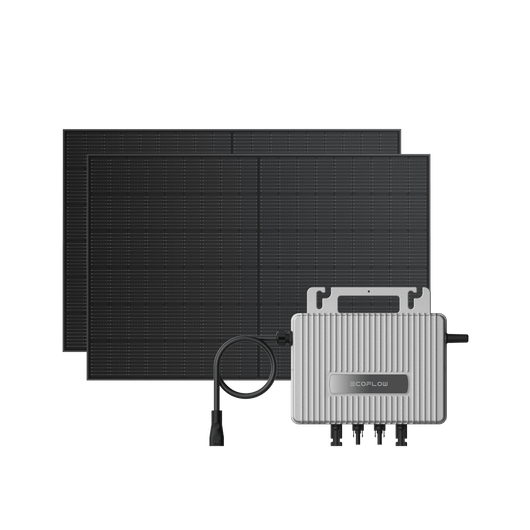
EcoFlow’s STREAM kit brings together an 800VA microinverter, two independently controlled solar channels, panel options, extension cables, app monitoring and mounting choices for gardens, walls and balconies. The inverter is IP67, rated at 3.48A maximum grid output and carries a ten-year stated warranty.
There is one decisive caveat. EcoFlow’s UK product page currently instructs buyers to have its supplied connection cable connected to the consumer unit by an electrician. That current bundle is therefore a useful small-solar system, but you should not quietly substitute a plug and call it compliant with the new route. Wait for explicit product-specific evidence if you want socket connection.
Check EcoFlow STREAM configurations and current price →
PluginSol may earn a commission from EcoFlow links on this page.
What will it generate?
Rated watts describe output under standard test conditions, not an all-day promise. Clouds, angle, shade, heat and the sun’s path continually change output. An 800Wp array might briefly approach its rating around a clear summer noon; it will also spend long periods well below it and produce nothing at night.
A sensible broad planning range for a well-sited 800Wp array is about 600–800kWh a year in much of Britain. Treat a shaded or vertical system more conservatively. Our 800W generation guide explores location and season, while the beginner’s guide explains the electrical basics.
Your first useful reading
Once set up, watch output alongside household consumption. If the system makes 500W while the home is using 650W, grid import falls to roughly 150W. If the house uses only 150W, the remaining generation may export. Moving laundry and dishwashing into sunny hours can be more valuable than obsessing over a perfect five-minute peak.
The aim is to finish with panels that cannot move, cables that cannot be damaged, a product connected exactly as approved, and expectations grounded in weather rather than marketing.